admin

The Rise of Cloud-Based ERP Solutions: A Revolution in Business Management

The Rise of Cloud-Based ERP Solutions: A Revolution in Business Management

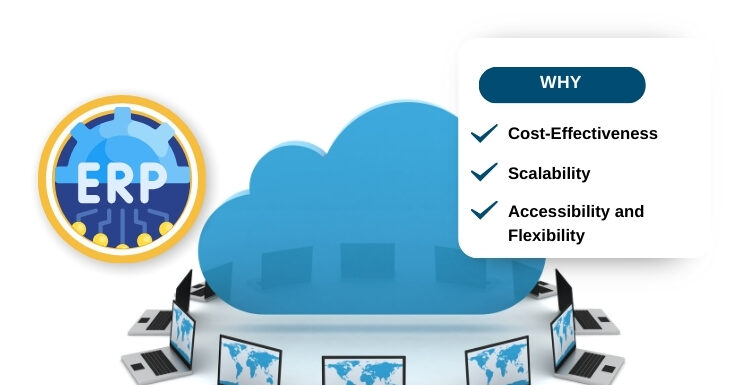
Amongst numerous innovations coming into the technical world, nothing has changed businesses as much as Cloud-based ERP systems. The integration of core business procedures finds a home in the clouds, and its emergence marks another important shift in how organizations conceptualize efficiency, scalability, or innovation. Why Cloud-Based ERP Solutions? ERP solutions of the past were all on-premises and offered gold-standard support for enterprise management. However, these systems were expensive to maintain and showed rigidity. Cloud-based ERP has managed to create a game changer by infusing ERP capabilities with cloud agility and access. Businesses around the world and of all sizes are fast adopting these systems for many very compelling reasons. Cost-Effectiveness Cloud ERP eliminates expensive hardware, significant IT staff, and recurrent maintenance costs. The subscription-based pricing models allow businesses to utilize their resources most strategically. Scalability Whether a start-up is getting ready for high growth or an established enterprise looking for international expansion, cloud ERP systems scale effortlessly to meet the growing demands. Accessibility and Flexibility Employees have always had access to all the critical business data from anywhere at any time, through any internet-enabled device. That’s incredibly valuable in today’s hybrid and remote work environments. Faster Time-to-Value Compared with on-premises deployments, cloud ERP deployments are faster and cause less disruption, so benefits are achieved much sooner. Advanced Security and Compliance With Cloud ERP, major organizations offer state-of-the-art security and time-to-time upgrades and maintain the industry benchmarks in compliance. Business gets the necessary peace of mind. Key Push Factors Behind This High Growth A few factors have fallen into place together to drive the adoption of cloud ERP solutions: Industries That Adopt Cloud ERP Be it manufacturing, retail, healthcare, or education, every industry is embracing cloud-based ERP. Here is how the different sectors are using these solutions: Retail It is integrated with inventory management and real-time insights and enables retailers to optimize supply chains and elevate customer experience. Manufacturing Optimized production cycles and predictive analytics minimize downtime. Healthcare Integrated systems facilitate patient care, compliance, and operational efficiency. Education Streamlined administrative processes and efficient resource allocation help organizations succeed academically. Challenges and Considerations When the advantages of cloud ERP are so obvious, there are still challenges one must overcome in the process of implementation. Businesses need to consider factors such as: Future of Cloud ERP The future of cloud-based ERP systems brightens up with the advancing technology. Artificial intelligence and machine learning will work towards smarter automation and predictive analytics. Systems can integrate into IoT device-embedded structures to collect data in real-time, thus optimizing operations further. What is crucial is that there is a focus on increasing sustainability through ERP, which makes the ERP provider create solutions capable of supporting green initiative concerns and eco-friendly resource management. Conclusion While the technological shift is significant, cloud-based ERP solutions represent a paradigm shift in the way an organization operates and competes in these times. Beyond what is conceivable thus far, such systems promise unmatched flexibility, scalability, and efficiency in providing organizations with an opportunity to innovate and adapt in ways previously unimaginable. To forward-looking businesses, cloud ERP is no longer optional and is imperative.

Continue Reading
ERP Implementation Challenges and Solutions

ERP Implementation Challenges and Solutions

ERP systems are sure to be machinery for any business that would want to streamline its processes, enhance productivity, and understand its system much more than ever. Indeed, a very big feat to activate any ERP system requires a sizeable investment concerning time, funds, and resources. Although this has proved to have myriad advantages, initiating an ERP system may be affiliated with numerous challenges. Here are some of the common challenges in ERP implementations along with solutions to such. 1. Poor Planning Poor planning is the major cause of ERP implementation failure. In general, if projects are not well planned, they often overshoot budgets or overrun deadlines. Solution: 2. Lack of Executive Support The projects of ERP require a high degree of organizational change, and thus it cannot be achieved without the right leadership and support of the executive members. Solution: 3. Resistance to Change Employees are going to resist the implementation of the new ERP system since they feel that they are either going to lose a job or work extra during the implementation period. Solution: 4. Training Lack of training is responsible for the underutilization of the system apart from the errors in the operation of the system. Solution: 5. Data Migration Data migration from old legacy systems to the new ERP is always very challenging and error-prone. Solution: 6. Cost Overruns The usual hidden complexity or scope creep causes the budget to blow out on an ERP implementation. Solution: 7. Over-Customization Over-customizing the ERP system will result in a maintenance headache and an upgrade nightmare, meaning inefficiencies are long-term issues. Solution: 8. Vendor Selection and Management A bad selection of the ERP vendor or not managing the relationship properly can kill the project. Solution: 9. Integration Challenges This integration of the ERP system with other applications is very technical and brings about operational disturbances. Solution: 10. Unrealistic Expectations Most organizations need instant results; when the ERP system does not provide instant ROI, they feel disappointed. Solution: Conclusion It’s tough to implement and, in terms of taking initiative, the likelihood of success remains. Businesses now can strategically identify these common pitfalls and thought plans, good leadership with effective change management, so get the value of these investments; remember, however, an ERP is not only some software but has been considered and treated as the strategic asset to provide growth and increase efficiency.
Continue Reading

ERP Implementation: Top Mistakes to Avoid in 2025

At the turn of 2025, the world of ERP keeps changing with new technologies and trends emerging, so it is very important to avoid common pitfalls in this regard.  These are some of the common mistakes one should look for in ERP implementations this year.  They include. 1.  ILL-defined Goals and Objectives Undefined business objectives pave the way to disaster when ignored during the implementation of an ERP system.  Companies jump headfirst into the implementation of ERP without any defined notion of what they expect to achieve.  Do not make the same mistake and have specific measurable goals to improve stock management, better customer satisfaction, or even automatic financial reporting. Solution: Deep In-depth Needs Analysis of the Business Strategic Aims regarding the Launch of the ERP System. 2.  Loose Change Management There are changes in process, jobs, and process flow of the system from the launch of an ERP.  The employees oppose such changes from the deploying authorities.  Failures in project implementation and poor percentages of user adoption rates arise after such alterations of alterations. Solution: An appropriate change management strategy should be implemented that includes communication, training programs, and the involvement of key stakeholders early in the process. 3.  Inappropriate Selection of the ERP System The wrong selection of an ERP system that is inappropriate for your business may result in inefficiencies and costly customizations.  Often companies commit this error due to a lack of appropriate research or aggressive marketing from vendors that mislead them. Solution: Compare in detail two different ERP applications by functionality, scalability, and interoperability with the current systems. 4.  Data migration complexity not forecasted. Data migration is, in general, one of the biggest pains of implementing any ERP solution. Poor planning normally leads to under-transfer or wrong information-data duplication, which flows out from the older system to new ones. Solution: Remove and standardize your data before migration. Prepare a plan for data migration testing and validation so that the data integrity is confirmed. 5. Testing Not Sufficient Lack of testing stages sometimes leads to under-exposed problems and hence affects the business running once the ERP system is live. Solution: Ensure an efficient unit test, system integration testing, and user acceptance testing of the system before it goes live.  All scenarios should be covered before their deployment. 6.  Failure to Consider Post-Implementation Support The post-Go-live support is as important as the Go-Live itself as it needs constant support and optimization.  Over time, this will lead to low system performance and user dissatisfaction. Solution: Tie up with your ERP vendor or a support team, which will provide continuous monitoring, updates, and training because your business is evolving. 7.  Over-Customization Customization may make an ERP system align better with your processes, but too much customization will make the system complex, harder to maintain, and costly to upgrade. Solution: Stick to standard functionalities as much as possible and consider re-engineering your processes to align with best practices built into the ERP system. 8.  Inadequate Budgeting ERP implementations are costlier than budgets as some hidden costs are related to training, customizations, and other integrations.  The omission of such expenses may put your project to a halt. Solution: Develop a practical budget considering all likely costs incurred and keep a contingency fund for probable cost overrun. 9.  Inadequate Project Management Paying less attention to proper project management will make the deadline postponed, creep in scope, and chaotic implementation. Solution: Hire an experienced project manager who knows how to implement ERP.  Implemented tested and tried methodologies for adequate project management and timely completion. 10.  Industry Trends and Innovations ERP systems in 2025 have been changed to incorporate AI, machine learning, and cloud-based solutions.  Ignoring all these improvements would risk the choosing of a system that soon would be outdated. Solution: Keep yourself updated with the ERP trends and choose a solution that is modern in embracing current technologies and adaptable in updates for the future. Conclusion ERP implementation is a journey toward change, which requires long-term planning, execution, and follow-up.  If the mistakes mentioned above can be avoided, it will assure businesses that the maximum returns on their ERP investment are achieved and laid up for future growth.  
Continue Reading
Vertical-Specific ERP Solutions: Do They Make Sense?

Vertical-Specific ERP Solutions: Do They Make Sense?

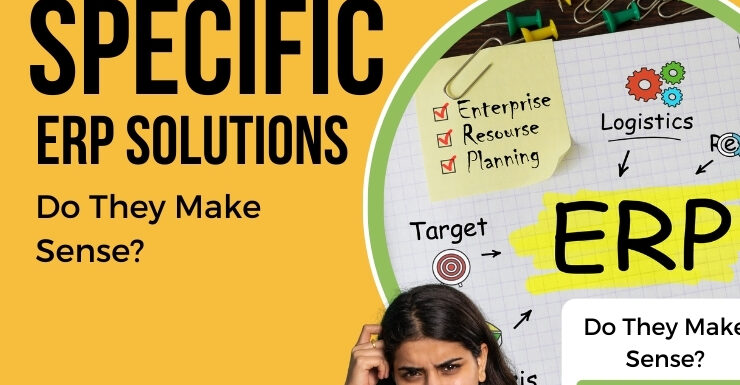
An organization is always in the quest for better ways to operate and improve efficiency while ensuring it maintains its competitive edge. To achieve these, Enterprise Resource Planning has had an important role central to those objectives. While most organizations settle for general ERP systems, other organizations need vertical-specific ERP solutions while the industry demands will require their need. Do you think this is a great way of going about things? Let’s go into further detail regarding the merits and demerits of vertical-specific ERP and if it’s worthwhile. What are Vertical-Specific ERP Solutions? Vertical-specific ERP solutions are developed for specific industries’ requirements. Whether manufacturing, healthcare, retail, construction, or agriculture, these systems are pre-configured with functionalities and workflows aligned to industry standards and regulations. These are not the generic ERP systems that require so much customization; vertical-specific solutions are mostly ready to deploy with minimal adjustments. Advantages of Vertical-Specific ERP Solutions 1. Tailored Functionality A vertical ERP system has industry-specific process building. This means that construction-based ERP systems may include contract management, compliance, and project management features while retail-based ones can offer integration with point of sale, demand forecasting, or inventory management, among others. 2. Minimizes Implementation Time Vertical-specific ERPs are built ready for an industry and hence more often less customizable and ready for installation faster as compared to generalized systems. Therefore, this would also save some time and would, hence also reduce the costs involved in preliminary setup. 3. Compliance and Regulation Health and finance are sensitive industries, in which strict rules of compliance prevail. A vertical-specific ERP contains more built-in regulatory compliance tools or features that lessen the chance of legal complications and subsequently penalties. 4. Usability With workflows and interfaces tailored to the needs of specific industries, vertical-specific ERP solutions can offer better usability. Employees are more likely to adapt quickly to a system that aligns with their day-to-day tasks. 5. Industry Expertise from Vendors Vertical-specific ERP vendors generally have extensive industry knowledge. Their expertise may make them better able to support, train, and even update the package to address dynamic industry needs. Disadvantages of Industry-Specific ERP Solutions 1. Inflexibility Though they do very well within their industry vertical, they might be too rigid when your business takes a different shape or expands its scope in new directions. 2. Higher Upfront Costs Vertical ERP solutions tend to be more expensive at the outset because of their industry-specific features. For small and medium-sized enterprises, this cost may be a significant barrier. 3. Risk of Vendor Lock-In Relying on a niche solution can lead to vendor lock-in, making it challenging to switch providers or integrate with other systems in the future. 4. Overkill for Simple Needs For businesses with very simple processes, the advanced features of a vertical ERP might be too much, and will end up paying for capabilities that are never used. When Does a Vertical-Specific ERP Make Sense? A vertical-specific ERP system makes sense if: On the other hand, a generic ERP system would be better if: Conclusion For any business operating in a specialized industry, vertical-specific ERP solutions could be a real game-changer. They offer specific functionality, and compliance support, and can be implemented more quickly. There are downsides, though; they are generally more expensive, and flexibility may be limited. The decision depends on analyzing your business needs and growth plans within your budget. This enables organizations to make informed decisions on choices aligned with their long-term goals. In this regard, a generic ERP or a vertical-specific one makes little difference except for which solution will most support operational efficiency and strategic goals.
Continue Reading
The Role of ERP in Enabling Digital Transformation

The Role of ERP in Enabling Digital Transformation

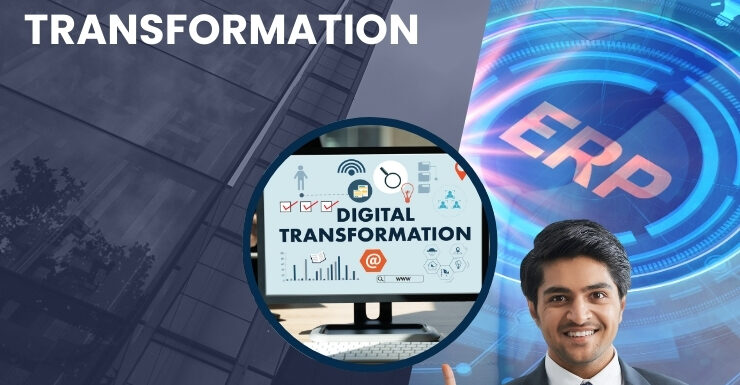
Change is occurring very rapidly, so digital transformation becomes a strategic necessity for companies to remain competitive and relevant. ERP is at the center of such transformations, forming the backbone of today’s modern business by streamlining processes, ensuring efficiency, and enabling data-driven decision-making. This blog focuses on how an ERP drives digital transformation for organizations and, in doing so, unlocks opportunities. Understanding Digital Transformation Digital transformation is more than the adoption of new technologies. It’s a change in the way business operates, engages with customers, and delivers value. It means to rethink processes, culture, and customer experiences in the digital-first world. The heart of this shift is integrating technology into every part of an organization, which is why ERP systems play such an important role. What is ERP? ERP systems are integrated software platforms that manage and automate core business processes like finance, supply chain, human resources, and manufacturing, and the most critical one is CRM. Centralizing data and processes enables an organization to source the most accurate information when making decisions, allowing the organization to function with higher ease and accuracy. How ERP Delivers Digital Transformation Business Process Simplification ERP systems help automate and optimize workflows, reduce redundancy, and eliminate inefficiency. This streamlined process helps businesses focus more on strategic activities rather than get bogged down by manual tasks. Data as a Key Enabler of Digital Transformation Data is a key enabler of digital transformation. ERP systems consolidate data from multiple sources to provide organizations with real-time insights and analytics. This data-driven approach helps businesses make informed decisions and adapt quickly to market changes. Scalability and Flexibility The modern ERP solution, especially cloud-based, provides scalability to accommodate business growth. They provide flexibility to integrate with emerging technologies like AI, IoT, and ML, further enhancing digital capabilities. Customer Experience The integration of CRM modules in ERP systems enables businesses to deliver personalized and consistent customer experiences. This customer-centric approach is the cornerstone of successful digital transformation. Innovation ERP systems act as a basis for innovation because they allow for process reengineering and encourage interdepartmental collaboration. In this way, organizations can experiment with new business models and introduce them into their operations quickly to stay ahead of the curve. Challenges and Considerations Cost and Complexity ERP implementation can be expensive and complex, requiring careful planning and resource allocation. Change Management Adopting an ERP system often necessitates a cultural shift within the organization. Employees’ buy-in and training are critical to success. Customization vs. Standardization Balancing the need for customization with the benefits of standardized processes can be challenging. Conclusion ERP systems are more than mere operational tools but strategic enablers of digital transformation. They enable businesses to manage business processes on a single platform, analyze data, and spur innovation in ways that can be navigated only in a digital-first world. The right ERP solution and implementation strategy will therefore be crucial in unlocking long-term success and sustainability for businesses on their digital transformation journeys. In a world where change is the only constant, ERP remains a major founding block in business quests for transformation and success.
Continue Reading
How Microsoft and Partners Simplify GP to BC Migration

How Microsoft and Partners Simplify GP to BC Migration

Microsoft Dynamics GP, known traditionally as Great Plains, has served as the enterprise resource planning platform for many businesses for decades. However, change is constant for businesses, and these companies are starting to transition to Microsoft Dynamics 365 Business Central. This newer generation of cloud ERP provides scale and integration while driving functionality that enables today’s complex business environment. For organizations willing to make that transition, the process is relatively easy through a partnership between Microsoft and its channel network. Here is how they are doing it. 1. Comprehensive Analysis and Planning Before initiating the migration process, Microsoft and its partners analyze the existing GP system in detail. This includes: Identifying Customizations: Reviewing customizations and third-party integrations in GP to understand their applicability in BC. Data Review: Reviewing the volume, quality, and complexity of data for smooth transfer. Business Process Evaluation: Mapping current processes to Business Central’s capabilities, thus identifying opportunities for improvement. 2. Migration Tools and Accelerators To make the migration process easier, Microsoft offers strong tools, including: Intelligent Cloud Insights: This tool allows businesses to connect GP to Business Central while keeping on-premises functionality in place during the transition. This tool facilitates a hybrid approach. Data Migration Toolkit: This is a solution specifically designed for transferring master data, historical transactions, and configurations from GP to BC with minimal manual intervention. In addition, Microsoft partners typically develop their proprietary tools and scripts to further automate and enhance the process. 3. Expertise from Certified Partners Microsoft’s extensive partner ecosystem is an important component of migrations. These certified experts provide: Industry-specific knowledge: Tailoring the migration approach to the specific needs of industries like manufacturing, retail, or professional services. Project management: Execution with minimal disruption to daily operations. Training and Support: Educate end-users about the interface and features of Business Central and make them use it. 4. Cloud-First Benefits Benefits of adopting Business Central, many in terms of cloud-first benefits are: Automatic Updates: Get the latest features and security updates in an automated process without manual effort. Seamless Integrations: Leverage native integration to Microsoft 365, Power BI, and other Azure services. Scalability: Ability to grow through flexible cloud resources that adjust according to the needs of the business. 5. Risk Mitigation and Continuous Support To minimize risks, Microsoft, along with its partners, will: Pilot the Migration: It would be migrated in a controlled environment before its full deployment. Address Data Sensitivity: Data security standards and regulations are met. Provide Ongoing Support: After migrating, support to resolve issues and enhance any performance concerns. Conclusion Migrating from Dynamics GP to Business Central may seem like a daunting task, but with the right tools, expertise, and planning, Microsoft and its partners ensure a smooth transition. By embracing Business Central, organizations unlock the potential of a modern ERP system designed for the digital age. If you’re considering this migration, reach out to a certified Microsoft partner to explore how they can tailor the journey to your business needs.
Continue Reading